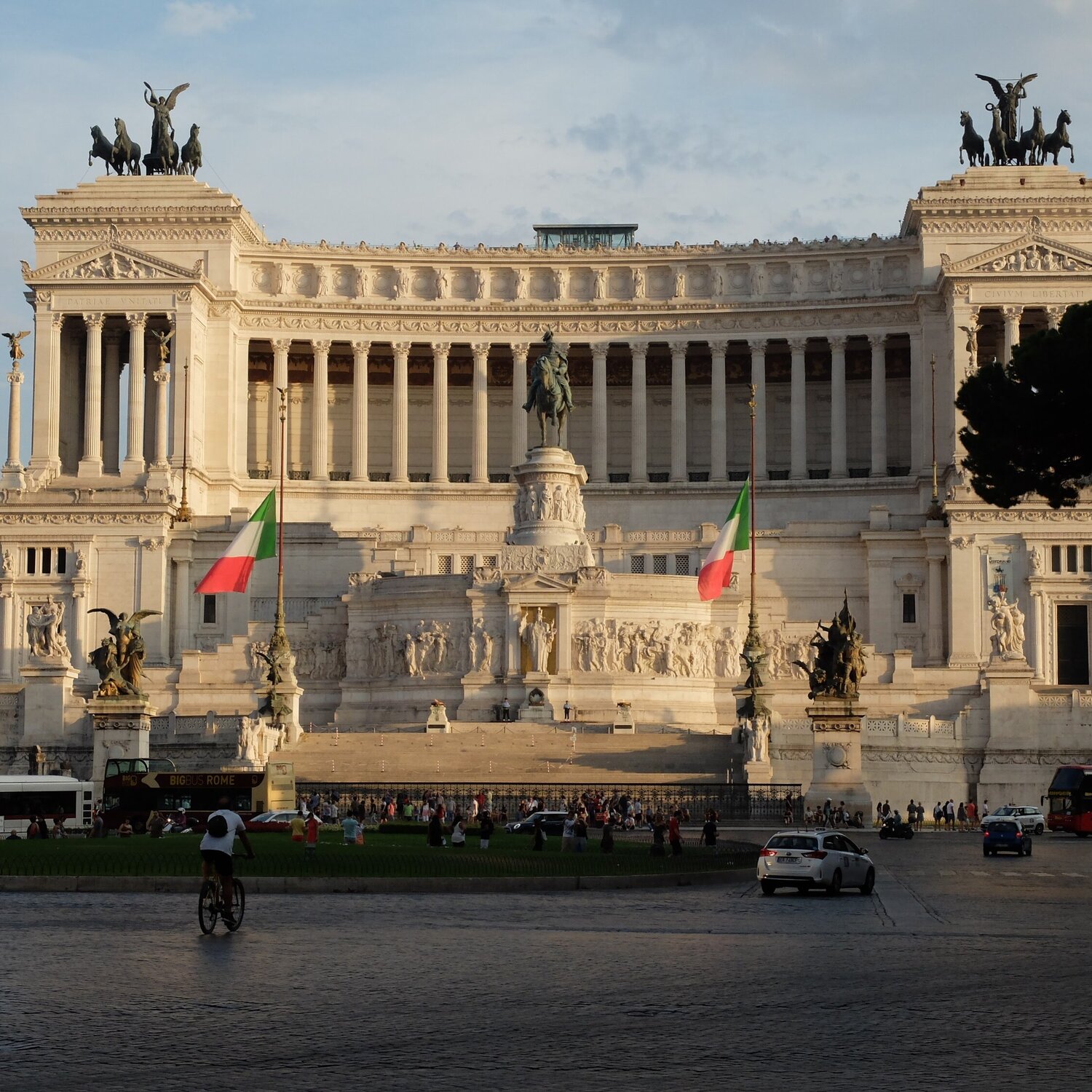
Here I have collected the top sights of Rome in a convenient sequence. You won’t need public transportation: all points are on the same route, and you need to get acquainted with Rome in person, not in the subway dungeons. The route between the extreme points is about 7 km, if you do not go inside. With visits and walks around the Colosseum, Forum and Villa Borghese, prepare for 15—20 km.
Colosseum
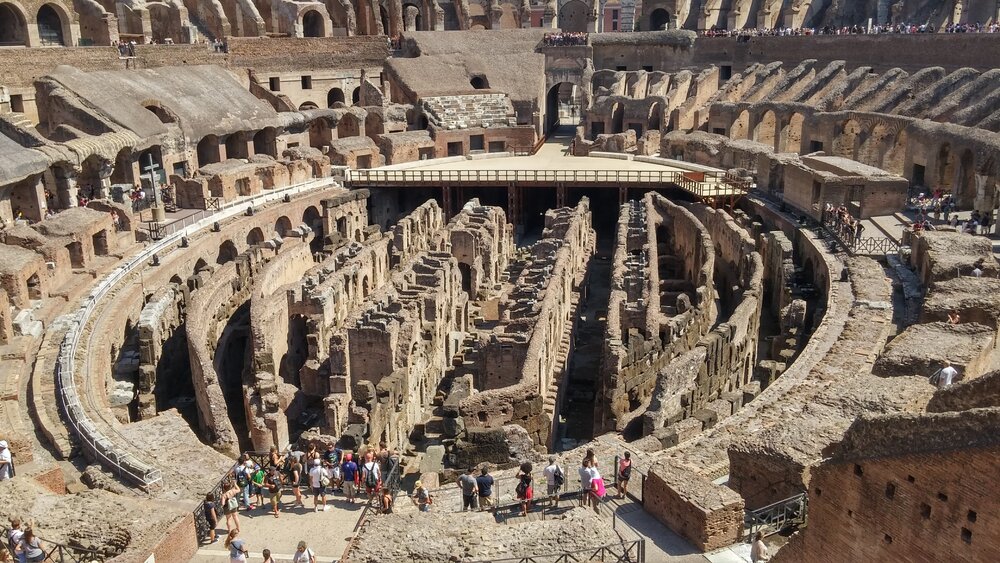
One of the main attractions of Rome and one of the seven new wonders of the world. The huge arena of the Colosseum is perfectly preserved since 80 AD, it is even difficult to imagine that the amphitheater is almost 2 thousand years old.
The Colosseum can be viewed from the outside, or you can go inside and see with your own eyes the famous arena where gladiatorial fights, animal poisoning and even sea battles were organized.

It is better to buy tickets in advance on the website. You will have to pay extra for online purchase, but it will save you from queues. If you don’t have time to buy online, try to get tickets not at the Colosseum ticket office, but at the Roman Forum ticket office — the queue is smaller there, and the ticket is comprehensive and covers the Colosseum, the Roman Forum and the Palatine. Another option is to see the Colosseum for free.
- Open: 8:30 a.m. to 4:30 p.m. or 7:15 p.m. depending on the month.
- Website: tickets, hours of operation.
- Cost: 24-hour ticket to the Colosseum, Roman Forum and Palatine Hill — 16 € + 2 € for online purchase; day ticket from 14:00 until closing — 9,5 € + 2 € for online purchase.
If you find yourself in Rome on New Year’s Eve, come to the Colosseum at midnight — it’s an extravaganza with a joyful crowd shouting, drinking, and blowing up firecrackers to fireworks. The Colosseum seems to come alive in the smoke and noise.
Roman Forum (Forum Romanum)
The life of ancient Rome took place here: there was a marketplace, a place of public meetings, a church, and political institutions. The ruins of numerous buildings now remain.
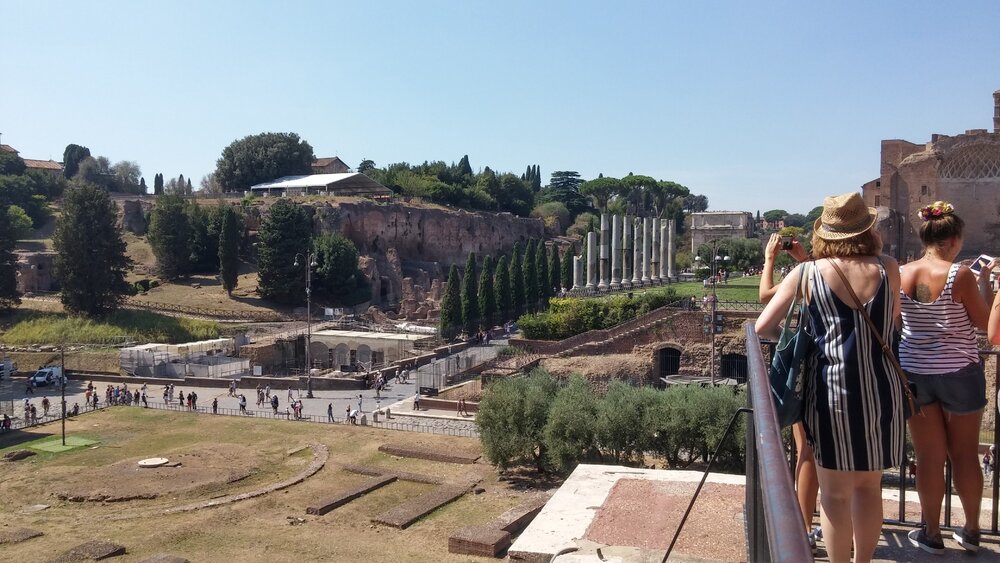
For more than just wandering among piles of stones and understanding the history and grandeur of these ruins, take a tour or audio guide. I recommend the izi.travel app. There’s a short summary for each point — just enough to get you a little up to speed.
- Open: 8:30 a.m. to 4:30 p.m. or 7:15 p.m. depending on the season.
- Website: tickets, hours of operation.
Bocca della Verità.
This attraction became famous thanks to the movie «Roman Holiday» with Audrey Hepburn. The Mouth of Truth is a round marble slab with the image of a deity, a medieval «lie detector»: put your hand in the mouth of the sculpture, and if you lie, you lose your hand. There is a huge queue of tourists to take a photo with a hand in the «Usta», so come here early in the morning or closer to the evening.
Ustas are installed in a more interesting landmark, the portico of the church of Santa Maria in Cosmedin. It catches the eye with its unusual seven-tiered bell tower. The church was built in the VI century, the floor is lined with ancient mosaics, and on the walls are frescoes and a fragment of mosaics of the VIII century. It also houses the relics of St. Valentine, the patron saint of lovers, after whom the holiday of February 14 is named.
- Open: church is 9: 30 a.m. to 5 p.m. in the winter and 6 p.m. in the summer, access to the Mouth of Truth closes 10 minutes before church closes.
- Cost: free of charge.
Capitol
One of the seven hills of Rome. It is home to the city hall, museums and the Basilica of Santa Maria in Ara Coeli. Step inside to see medieval frescoes, mosaics and tombstones by Michelangelo.
At the foot of the hill are the ruins of «insulas», the name of the houses that were rented out. It was mostly inhabited by the poor.
There are two staircases to climb the Capitoline Hill. Both staircases are famous: one because Michelangelo himself built it, and the other because it brings good luck in the lottery. I haven’t checked it out, but you should try it.
In the square there is a monument to the she-wolf who nursed Romulus and Remus. This is a copy, the original is kept in the Capitoline Museum.
Also on the hill is the Mamertin Prison, built before our era. The most famous prisoners of the prison are considered to be the Apostles Peter and Paul — so says the legend, but there is no evidence of this. There is now a museum inside.
- Open: museums from 9:30 to 19:30, basilica from 8:00 to 19:00, prison from 8:30 to 16:30 in winter and until 19:00 in summer.
- Website: museum hours, museum tickets.
- Cost: museums — 15 €, basilica — free, prison — 10 €.
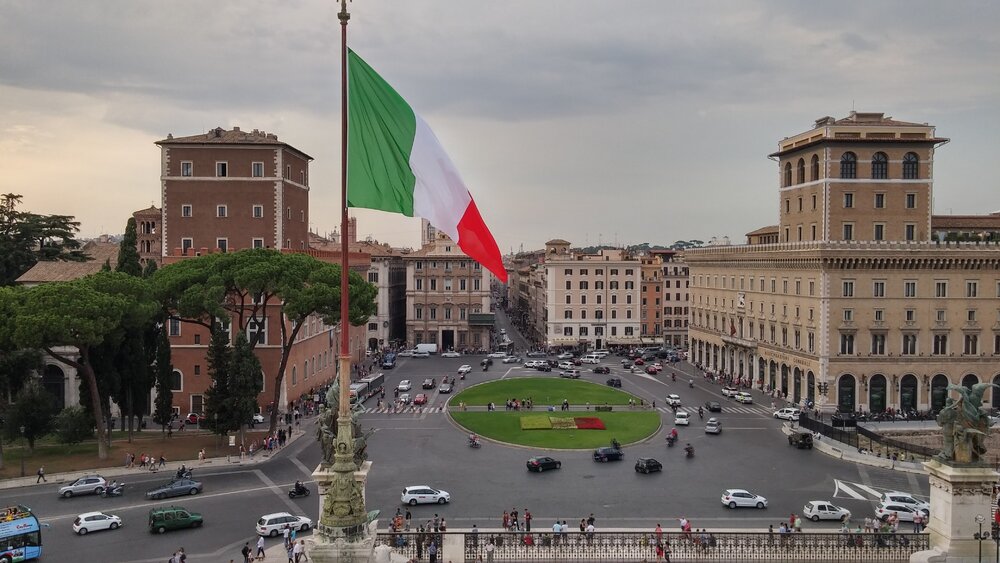
Vittoriano and Piazza Venezia (Venice Square)
Piazza Venezia is named after the palazzo of the same name, which was the seat of the Republic of Venice and is now the national museum. If you enter the palace courtyard, you will find yourself in a shady garden with a fountain, where you can take a breather and relax from the heat and crowds of tourists.
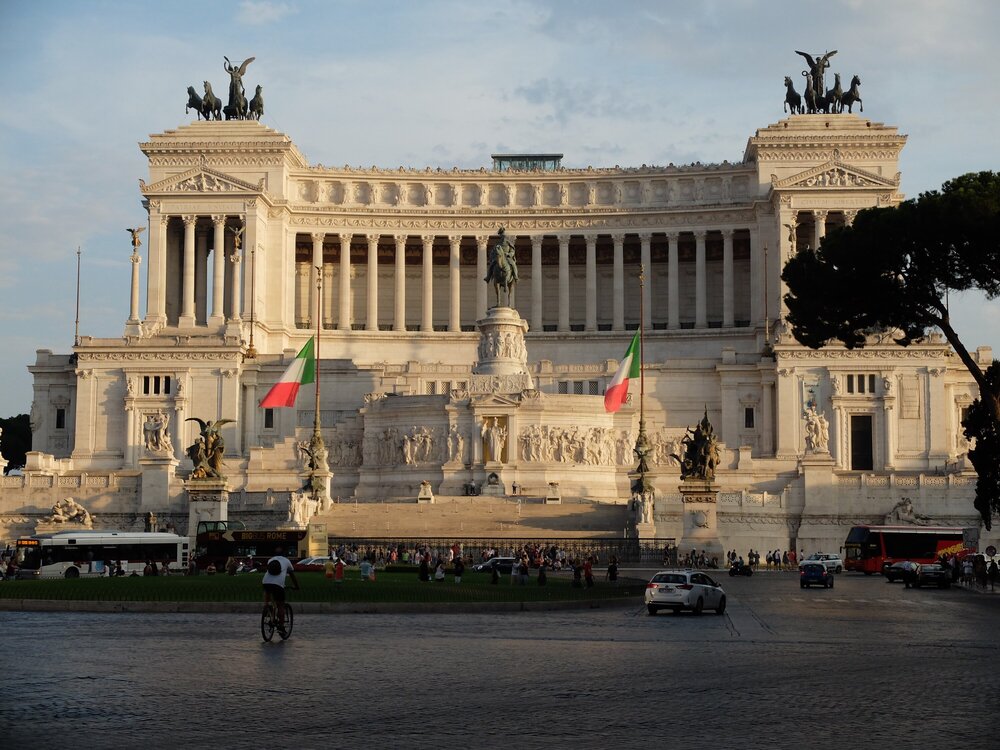
The main thing that is hard to miss in Venice’s Piazza Venezia is Vittoriano. It is not a palace, but a monument in honor of the first king of united Italy — Victor Emmanuel II.
The Romans themselves are not enamored of Vittoriano and contemptuously call him a typewriter, or a wedding cake, or even a false jaw.
Here you will find the Museum of United Italy and the Museum of Navy Banners. At the very top there is an observation deck with an excellent view of the city.
- Open: observation deck — Fri.-Thurs. from 9:30 to 19:30, Fri.-Sat. — from 9:30 to 22:00, on Sundays. — from 9:30 to 20:30, museums — tt.-tues. from 9:00 to 17:30.
- Website: hours of operation.
- Cost: Fleet Museum — free of charge, Museum of United Italy — 5 €, observation deck — 7 €.
Pantheon
One of the main symbols of the city is the famous ancient temple, built back in the 2nd century AD as the pagan «temple of all gods». Famous Italians were buried in the Pantheon: Raphael Santi and his bride, the first king of united Italy, Victor Emmanuel II, and King Umberto I are buried here.
Today it is a functioning Christian church and a big mystery. The first mystery is how the Pantheon managed to be so preserved, and the second is its gigantic dome, which rests only on the walls with no additional supports.
There are no windows in the temple, and the only source of light is the «oculus», a round hole in the dome. According to one version, it served as a sundial: a beam of light at different times of the day illuminates a certain area of the temple. According to another version, the oculus is part of the observatory: along the perimeter of the Pantheon are 7 niches, each of which stood a sculpture of a god patronizing a certain planet. Beams of light at different times of the year illuminate different niches, and therefore different planets.
- Open: Mon-Sat. — from 8:30 to 19:30, Sunday. — 9:00 to 18:00, the last visit is possible 15 minutes before closing.
- Website: hours of operation, tours.
- Cost: free, guided tour from 20 €, audio guide from 7 €.
Piazza Navona (Navona Square)
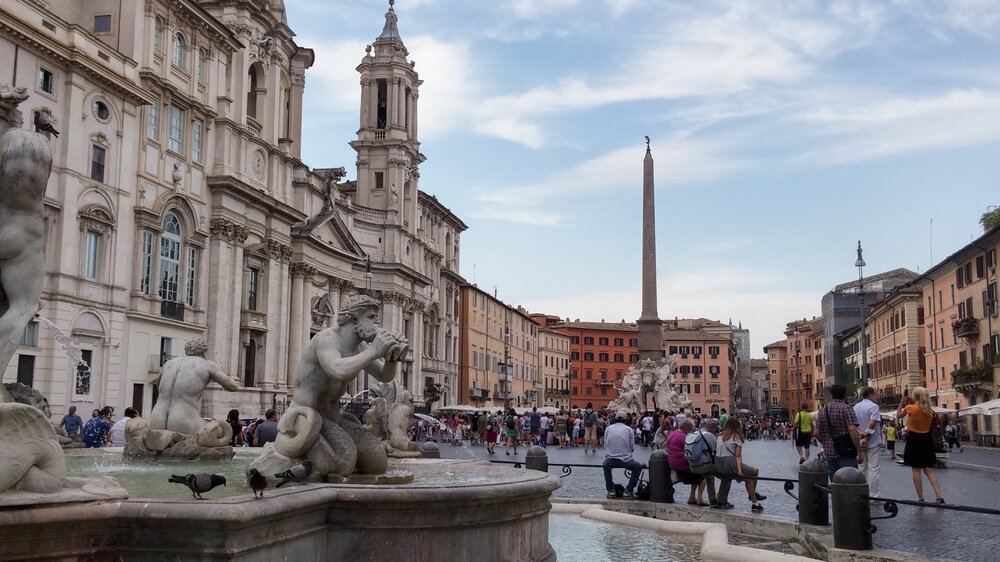
Once in Piazza Navona, you may not realize that it is a square because it has the unusual shape of an elongated oval. This is no accident: at first it was the site of a stadium where sporting events were held. By the Middle Ages, the stadium was no longer used for its intended purpose, and its perimeter was gradually built up with houses. Thus, the stadium turned into a square, but the shape remained.
In the Middle Ages, it was the site of a market and fairs. This tradition has been preserved to this day. In winter, Christmas fairs are held on the square, and in summer, street artists and musicians settle here.
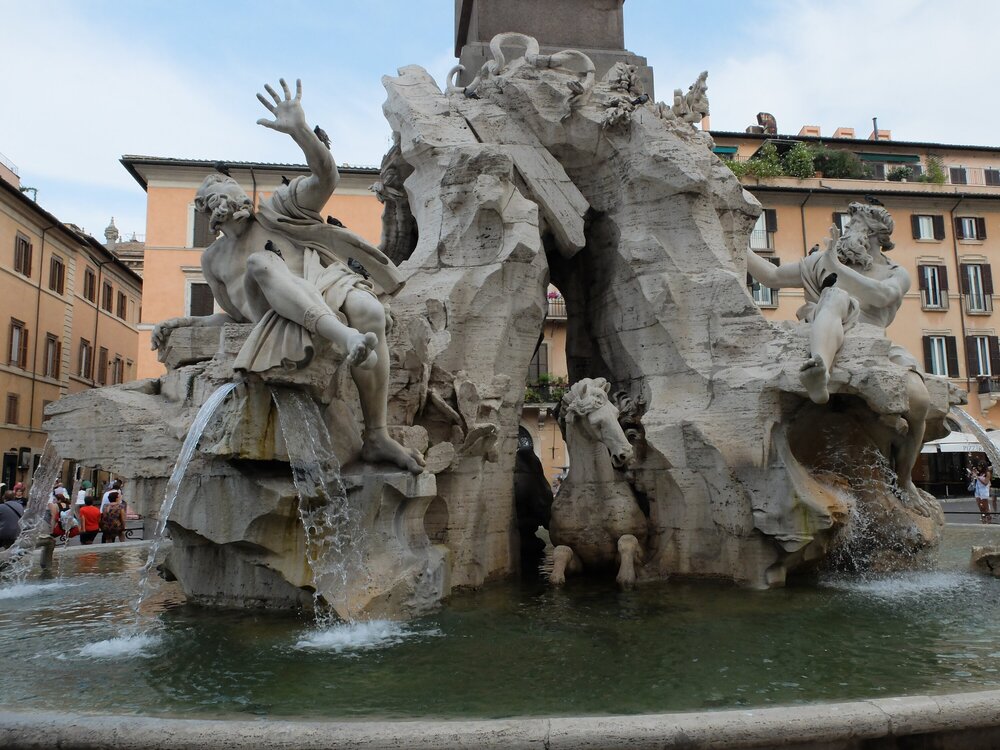
Now it is a baroque square with three fountains — the Fontana dei Quattro Fiumi (Fountain of the Four Rivers), the Fontana del Nettuno (Neptune) and the Moor. There is also the luxurious Pamphili Palace, which houses the Brazilian Embassy, and two churches with very different architecture.
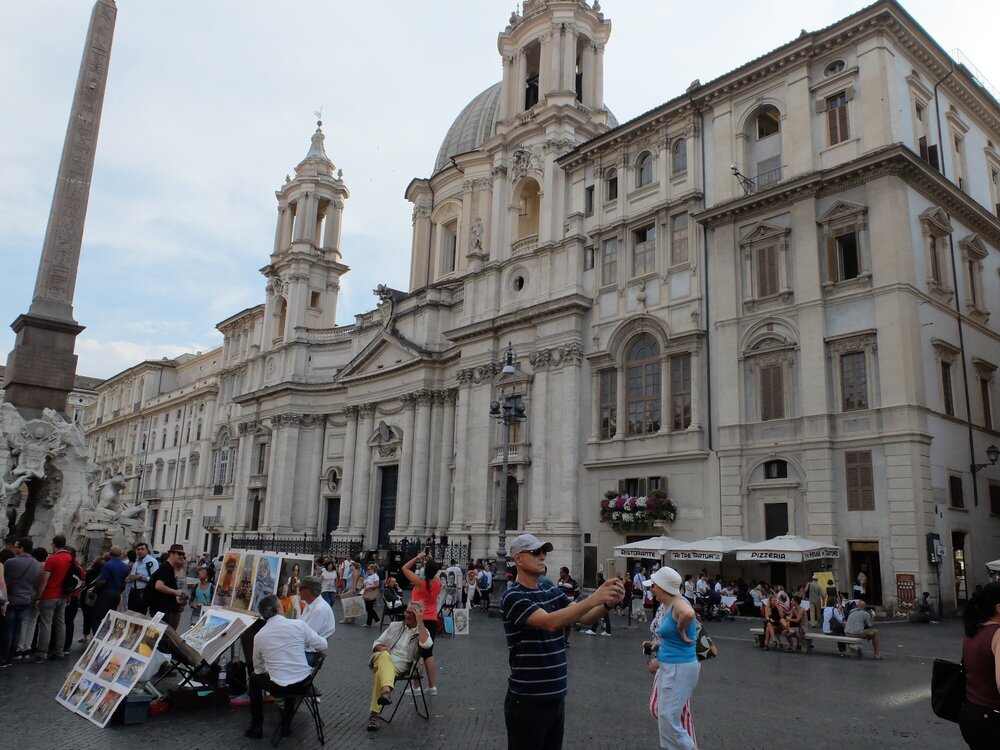
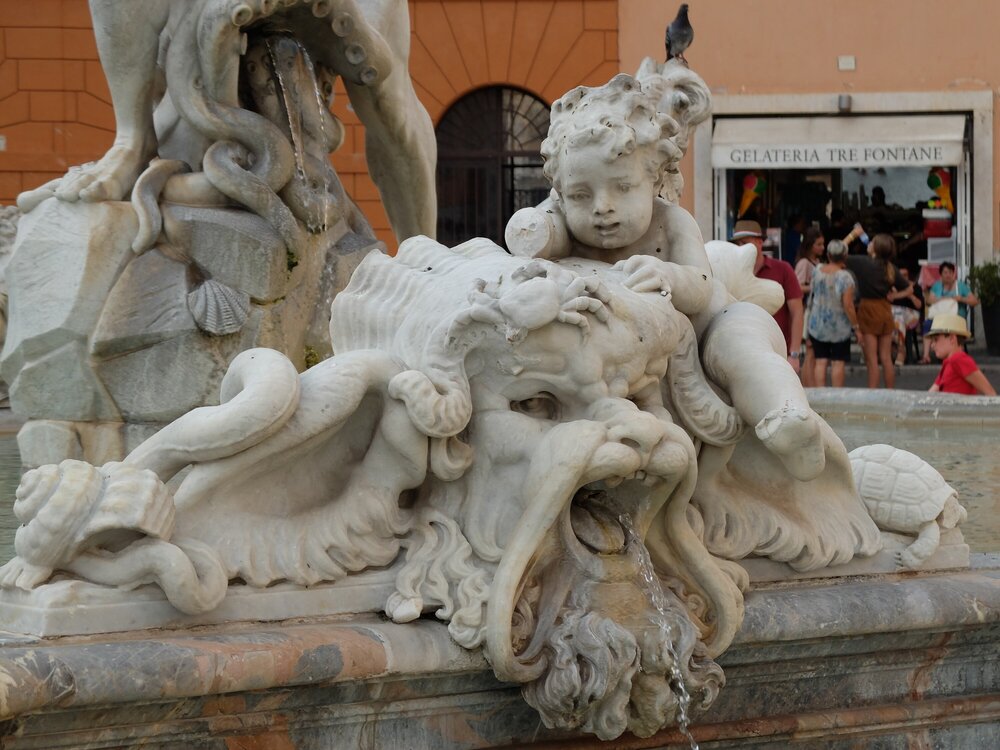
The Basilica of Sant’Agnese in Agone is one of the most beautiful churches in Rome. It is attractive from the outside, with its ornate white Baroque facade, and richly decorated inside. And to the north of the square is the church dedicated to the Virgin Mary (Nostra Signora del Sacro Cuore). It was built in the 12th century into the ruins of the stadium. The church is squeezed on both sides by houses and does not make a strong impression from the outside, but inside you can see Raphael’s frescoes.
Fontana di Trevi (Fontana di Trevi)
The Baroque grandeur occupies half of Piazza di Trevi and the other half is filled with tourists. You can only enjoy the fountain and take photos in the early morning; the rest of the time you have to wade through the crowds.
The fountain took 30 years to build, and the result is a monumental work of art with many details. It is the largest fountain in Rome, almost 25 meters high and about 50 meters wide.
It was in this fountain that the famous bathing scene from the movie «Sweet Life» was filmed. There is also a legend connected with the fountain: you have to throw a coin into the fountain if you want to return to Rome, two coins to fall in love, and three coins to get married. The authorities of Rome take thousands of euros out of the fountain every year.
Piazza di Spagna (Spanish Square)
The square is home to the Spanish Embassy — hence the name. The square is small, but a favorite of tourists and locals alike. Here are a few things to look out for.
The first is the boat-shaped Fontana della Barcaccia (Barcaccia Fountain). It commemorates the Roman flood when the Tiber overflowed its banks and flooded the city center.
The second is the grand Spanish staircase (Scalinata di Trinità dei Monti). The steps of the staircase used to be a favorite place for tourists to take a break: to bask in the sunshine or have a snack with a beautiful view of the square. In 2019, the Rome authorities introduced a ban: now you can’t even sit on the steps — you can be fined between €250 and €400.
Fashion shows are held on the stairs, Audrey Hepburn’s character in the movie «Roman Holiday» ate ice cream on these steps, and Christmas shows are organized here in winter.
Via dei Condotti, famous for its fashion boutiques, runs off Piazza España. It is also home to two of the oldest cafes — Babington’s, an English tea house opened in 1896, and Rome’s first coffee house, Antico Caffe Greco, founded in 1760. It is said that Gogol wrote Dead Souls at a table here, and he lived in Piazza España.
Villa Borghese (Villa Borghese)
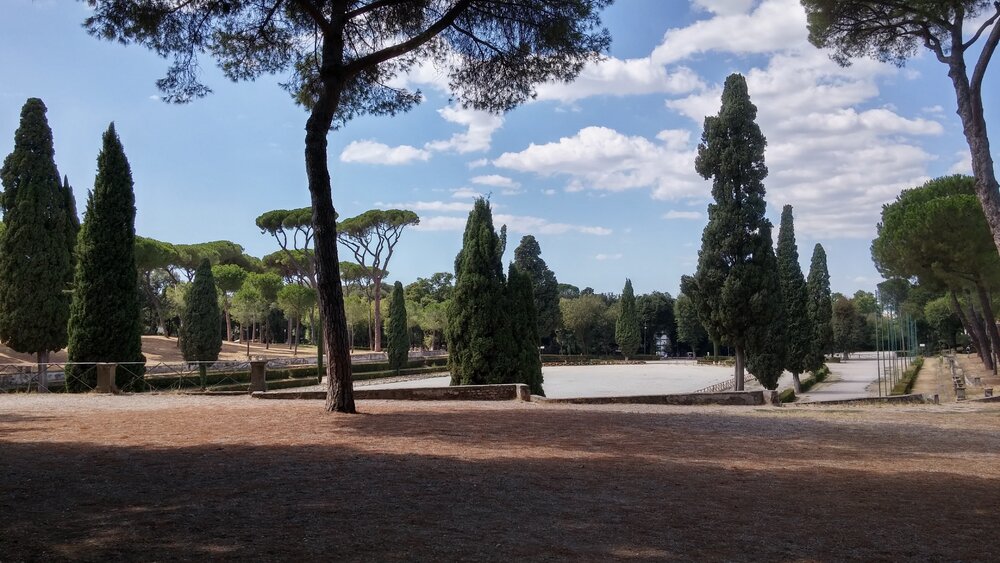
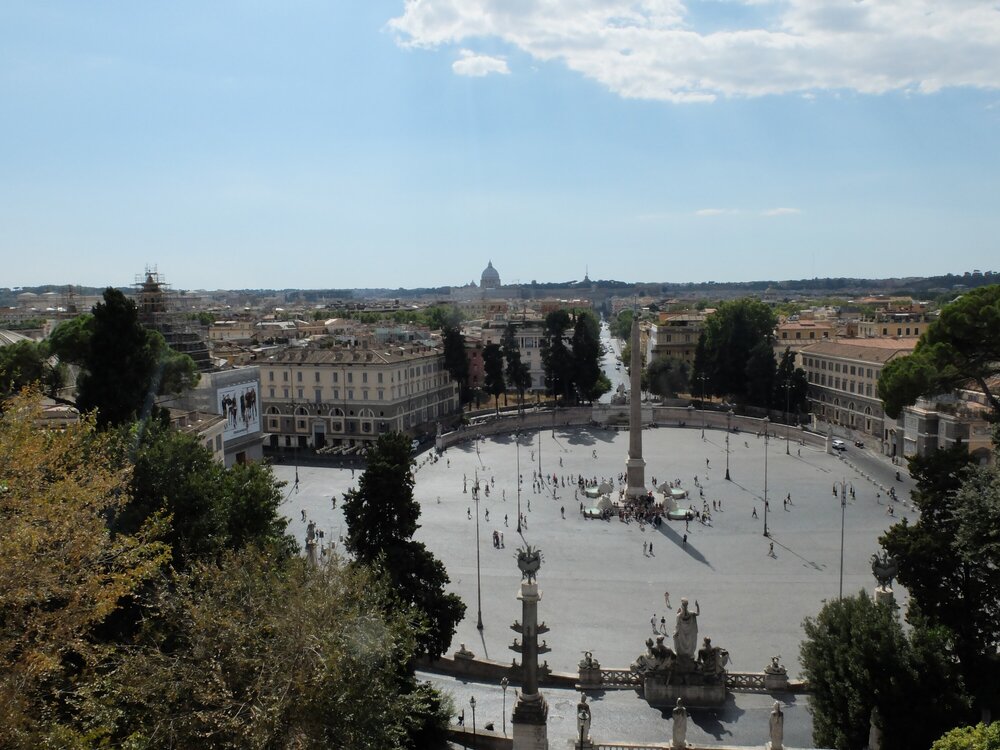
If you climb the Spanish Steps, you will reach the Pincio Hill, where Villa Borghese is located, a huge park of 80 hectares with fountains, ancient statues, a lake and museums. Here you can walk all day, rent a bike or ride a horse.
On the territory there is the Borghese Gallery, where there is a collection of art of the rich family — works of Bernini, Caravaggio, Raphael, sculptures of XVI–XVII centuries, as well as the National Gallery of Modern Art, where the main figures of Italian art of XIX–XX centuries are presented, Villa Giulia with a collection of Etruscan art and several other museums.
The Borghese Park ends with an observation deck overlooking the city.
- Open: park — 24 hours a day, Borghese Gallery — Fri.- Fri. from 9:00 to 19:00.
- Website: tickets and opening times of the Borghese Gallery.
- Cost: entrance to the park is free, Borghese Gallery 20 €, plus 2 € for online purchase.
One day is incredibly short for Rome, it can be explored for days or weeks. One day is enough to see the main sights and want to come back again.